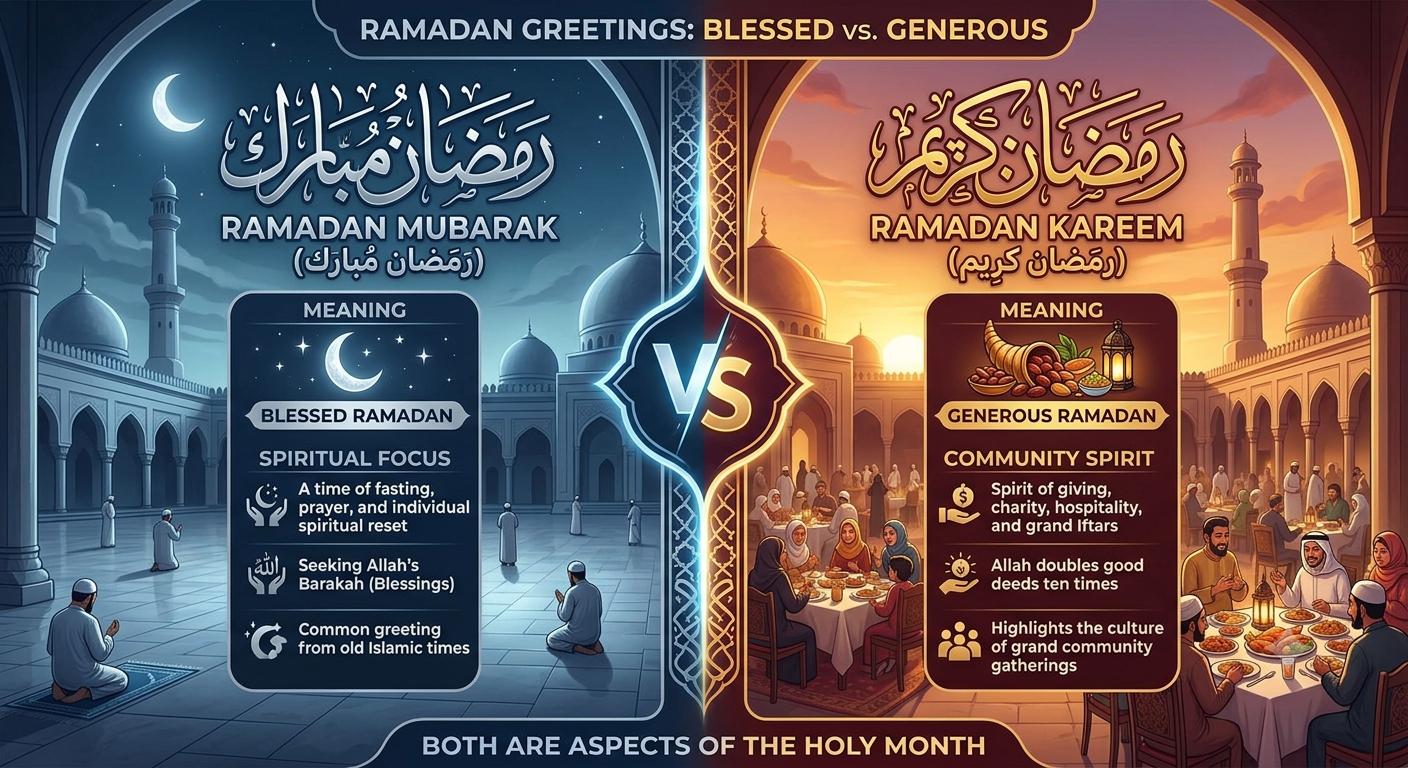
Ramadan is one of the most sacred months in Islam, observed by Muslims around the world through fasting, prayer, charity, Quran recitation, and increased worship. During this blessed month, Muslims commonly greet one another by saying “Ramadan Mubarak” or “Ramadan Kareem.” Although both expressions are widely used, many people wonder whether they have different meanings.
Understanding the meaning behind these greetings can help Muslims use them appropriately and appreciate the spirit of Ramadan. Those taking part in Ramadan courses can also learn more about the Islamic significance of Ramadan, its virtues, and the recommended acts of worship during this special month.
What Does Ramadan Mubarak Mean?
“Ramadan Mubarak” is commonly understood as “Blessed Ramadan” or “May Ramadan be blessed.”
The Arabic word Mubarak (مُبَارَك) comes from a root associated with blessing and goodness. When Muslims say “Ramadan Mubarak,” they are essentially wishing someone a blessed and spiritually rewarding Ramadan.
It is a warm and respectful greeting that can be used when Ramadan begins and throughout the month.
For example, you might say:
Ramadan Mubarak! May Allah accept your fasting and prayers.
Or:
Ramadan Mubarak to you and your family. May Allah bless you throughout this holy month.
What Does Ramadan Kareem Mean?
“Ramadan Kareem” is generally translated as “Generous Ramadan” or “Ramadan is generous.”
The Arabic word Kareem (كَرِيم) means generous, noble, or gracious. The expression highlights the generosity and blessings associated with Ramadan, particularly the opportunities Muslims have to earn rewards through fasting, charity, prayer, Quran recitation, and other acts of worship.
It is also a widely recognized Ramadan greeting among Muslims in many countries.
For example:
Ramadan Kareem! May Allah fill your month with peace and blessings.
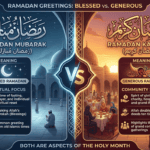
Ramadan Mubarak vs Ramadan Kareem: The Main Difference
The main difference is the meaning of the Arabic words Mubarak and Kareem.
- Ramadan Mubarak = Blessed Ramadan
- Ramadan Kareem = Generous Ramadan
“Ramadan Mubarak” focuses more directly on wishing someone blessings during Ramadan. “Ramadan Kareem” emphasizes the generosity and goodness associated with the month.
However, both expressions are generally used as greetings and good wishes during Ramadan. The difference should not be viewed as a major religious distinction.
Which Greeting Should You Use?
There is no need to feel confused about whether you should say “Ramadan Mubarak” or “Ramadan Kareem.” Both are commonly used by Muslims to exchange good wishes during Ramadan.
You can choose either expression depending on your personal preference, culture, or the greeting commonly used by your family and community.
The most important thing is the sincere intention behind the greeting. A simple Ramadan wish can remind another person of the importance of fasting, worship, charity, patience, and gratitude.
When Should You Say Ramadan Mubarak?
You can say Ramadan Mubarak when Ramadan begins and throughout the month.
It can be used when speaking with family members, friends, colleagues, neighbors, or other Muslims. You can also use it in text messages, social media posts, greeting cards, and personal conversations.
For example:
“Ramadan Mubarak! May Allah accept your fasting, prayers, and good deeds.”
When Should You Say Ramadan Kareem?
Similarly, Ramadan Kareem can be used throughout the month of Ramadan.
It is particularly common in many Muslim communities and is often used in greetings, advertisements, community announcements, and social media messages.
You can also combine the greeting with a personal dua:
“Ramadan Kareem! May Allah grant you and your family peace, mercy, and countless blessings.”
Is Ramadan Mubarak or Ramadan Kareem Better?
Neither greeting needs to be considered universally “better.” Both are expressions of goodwill associated with Ramadan.
If you want to emphasize blessings, Ramadan Mubarak is a natural choice. If you want to highlight the generosity and goodness associated with Ramadan, Ramadan Kareem is appropriate.
What matters most is remembering the purpose of Ramadan and making sincere efforts to increase worship and good deeds.
Why Do Muslims Exchange Ramadan Greetings?
Ramadan greetings are more than simple words. They provide an opportunity for Muslims to remind one another about the importance of this sacred month.
Ramadan encourages believers to strengthen their relationship with Allah, practice patience, help those in need, forgive others, and increase acts of worship.
A greeting such as “Ramadan Mubarak” can therefore carry a meaningful message of blessing, goodwill, and spiritual encouragement.
Final Thoughts
Ramadan Mubarak and Ramadan Kareem are both widely used greetings during the holy month of Ramadan. “Ramadan Mubarak” conveys the idea of a blessed Ramadan, while “Ramadan Kareem” highlights the generosity and goodness associated with the month.
Rather than focusing too much on which phrase is better, Muslims can use either greeting with sincerity and good intentions. The true beauty of Ramadan lies in fasting, prayer, charity, Quran recitation, repentance, and seeking the pleasure of Allah.
Frequently Asked Questions
1. What does Ramadan Mubarak mean?
Ramadan Mubarak means “Blessed Ramadan” and is used to wish someone a blessed Ramadan.
2. What does Ramadan Kareem mean?
Ramadan Kareem generally means “Generous Ramadan” and highlights the generosity and blessings associated with Ramadan.
3. Is Ramadan Mubarak or Ramadan Kareem correct?
Both expressions are widely used as Ramadan greetings. The intended meaning and context are important.
4. Can I say Ramadan Mubarak to non-Muslims?
Yes. You can use the greeting when wishing someone well during Ramadan, including respectfully explaining its meaning if needed.
5. How can I reply to Ramadan Mubarak?
You can reply with “Ramadan Mubarak to you too” or offer a similar dua, such as wishing them blessings and an accepted Ramadan.