Islam is a complete way of life that guides Muslims in matters of faith, worship, character, family, and everyday conduct. Its teachings encourage believers to develop a strong relationship with Allah while treating other people with kindness, justice, honesty, and respect.
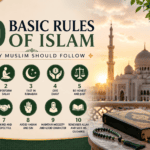
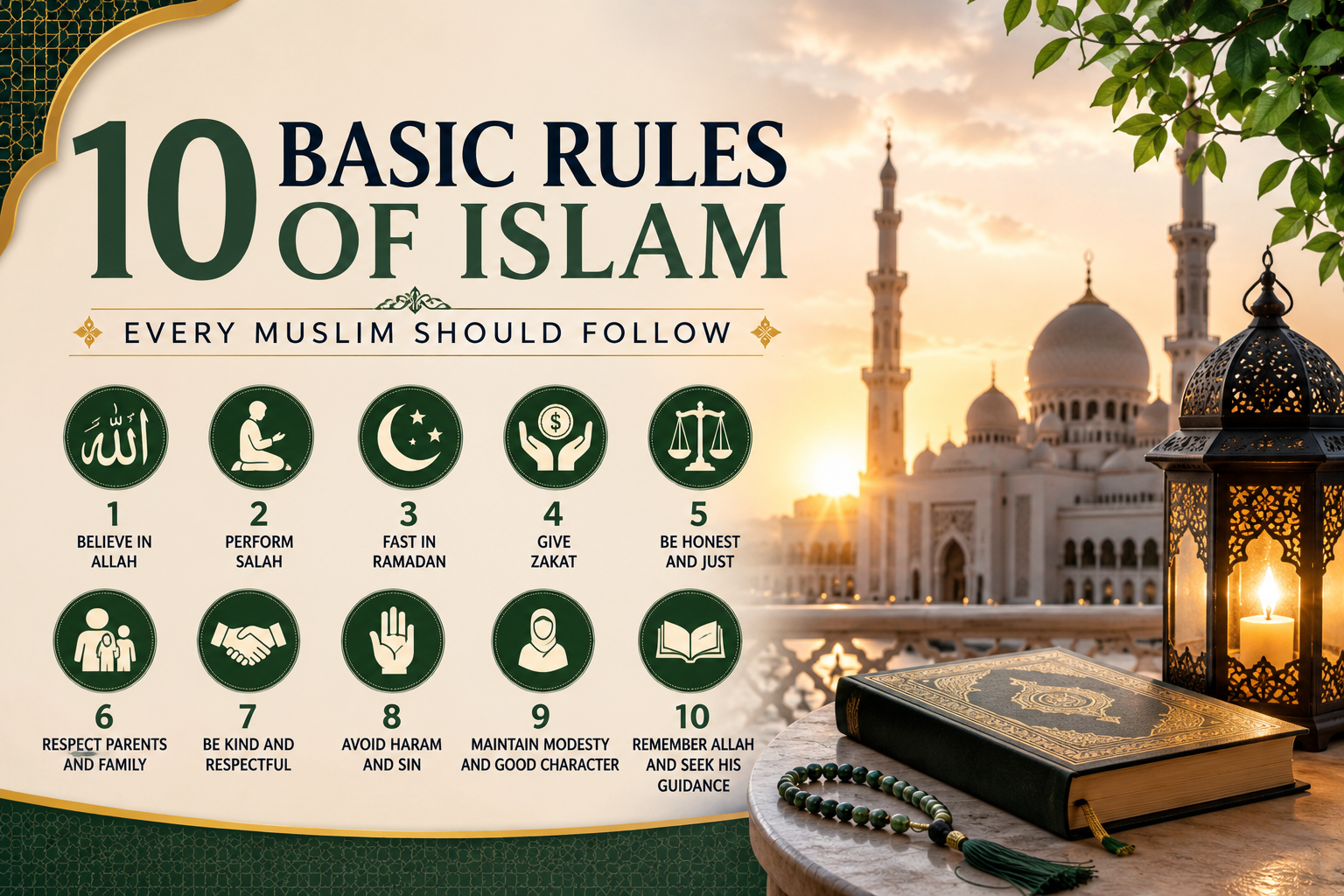
For anyone looking to understand the foundations of Islam for all, it is important to remember that Islam is not limited to acts of worship alone. It also teaches Muslims how to behave, make ethical choices, fulfil responsibilities, and live peacefully with others. The following ten basic rules provide a simple overview of important Islamic principles that every Muslim should strive to follow.
1. Believe in the Oneness of Allah
The foundation of Islam is belief in the oneness of Allah, known as Tawheed. Muslims believe that Allah is the only One worthy of worship and that He has no partner or equal.
A Muslim’s faith also includes belief in Allah’s angels, revealed books, messengers, the Day of Judgment, and divine decree. Keeping this belief strong helps Muslims remain connected to their Creator in both difficult and easy times.
2. Establish the Five Daily Prayers
Salah, or the five daily prayers, is one of the most important acts of worship in Islam. Muslims are required to pray at five appointed times throughout the day: Fajr, Dhuhr, Asr, Maghrib, and Isha. People who convert to Islam can gradually learn the prayer times, movements, and recitations as they become familiar with their new faith.
Prayer provides an opportunity to remember Allah, seek His guidance, and step away from the distractions of everyday life. Maintaining regular prayers can also help develop discipline and strengthen a person’s spiritual connection with Allah.
3. Fast During Ramadan
Fasting during the month of Ramadan is another fundamental obligation for Muslims who are able to fast. From dawn until sunset, Muslims abstain from food and drink while also making an effort to avoid sinful behaviour.
Ramadan is not simply about staying hungry or thirsty. It is a time for increased prayer, charity, Quran recitation, self-control, forgiveness, and reflection. Fasting teaches patience and reminds Muslims of the needs of those who experience hardship.
4. Give Zakat and Help Those in Need
Zakat is an obligatory form of charity for eligible Muslims who meet the required conditions. It is intended to support people in need and purify one’s wealth.
Beyond obligatory Zakat, Islam strongly encourages voluntary charity, known as Sadaqah. Helping a neighbour, feeding someone, supporting a struggling family, or offering assistance to someone in difficulty can all reflect the Islamic principle of generosity.
5. Speak the Truth and Be Honest
Honesty is an essential part of good Muslim character. Muslims are encouraged to speak truthfully, keep promises, fulfil agreements, and avoid deception.
Honesty applies to every area of life, including business, friendships, family relationships, education, and online communication. A Muslim should avoid lying or misleading others even when telling the truth may be difficult.
6. Treat Parents and Family Members With Respect
Islam places great importance on maintaining good relationships with parents and family members. Muslims are encouraged to speak respectfully to their parents, care for them, and appreciate their sacrifices.
The principle also extends to other relatives. Maintaining family ties, visiting relatives, helping family members, and resolving disagreements peacefully are important aspects of good Muslim character.
7. Treat Others With Kindness and Respect
Islam teaches Muslims to treat people with fairness, compassion, and respect. Good behaviour should not be limited to close friends or family members; Muslims are encouraged to show kindness to neighbours, guests, colleagues, and members of the wider community.
A Muslim should avoid insulting, humiliating, bullying, or deliberately harming others. Even small acts of kindness can have great value when they are done sincerely.
8. Avoid Haram and Harmful Actions
Muslims are expected to distinguish between what is Halal (permissible) and Haram (prohibited). Islamic teachings provide guidance about food, finances, relationships, speech, behaviour, and other aspects of life.
Avoiding prohibited actions requires awareness and self-control. Muslims should also try to stay away from activities that cause harm to themselves or others and seek forgiveness when they make mistakes.
9. Maintain Modesty and Good Character
Modesty, or Haya, is an important Islamic value. It includes modesty in clothing and appearance as well as modesty in speech, behaviour, and interactions with others.
Good character also means controlling anger, avoiding arrogance, forgiving people, being patient, and speaking politely. A person’s manners and behaviour are an important reflection of their faith.
10. Remember Allah and Follow His Guidance
A Muslim should regularly remember Allah through Dhikr, supplication, Quran recitation, prayer, and reflection. Remembering Allah helps believers remain conscious of their responsibilities and encourages them to make better choices.
The Quran and the authentic teachings of Prophet Muhammad ﷺ provide guidance for Muslims in different areas of life. Learning about Islam, asking knowledgeable people when unsure, and continuously improving one’s character can help a Muslim grow spiritually.
Why Following Islamic Rules Matters
The basic rules of Islam are not simply a list of restrictions. They provide a framework for developing faith, discipline, compassion, honesty, and responsibility. Worship strengthens the relationship between a person and Allah, while good character improves relationships with other people.
Following these principles can also help Muslims create a balanced lifestyle in which spiritual responsibilities and everyday duties are both taken seriously.
How to Follow Islamic Teachings in Everyday Life
Following Islamic teachings does not mean that a person will never make mistakes. Muslims are human and may sometimes fall short. What matters is making a sincere effort to improve, seeking forgiveness, and returning to the right path.
Simple habits can make Islamic principles easier to practise every day:
- Perform the five daily prayers on time.
- Read and understand a portion of the Quran regularly.
- Make Dhikr and Dua throughout the day.
- Speak honestly and avoid harmful gossip.
- Treat parents, relatives, neighbours, and others respectfully.
- Give charity whenever possible.
- Practise patience when facing difficulties.
- Avoid clearly prohibited actions.
- Ask knowledgeable scholars about matters of religious uncertainty.
- Regularly reflect on your actions and seek forgiveness from Allah.
The Importance of Learning Islam
Learning about Islam is a lifelong journey. Muslims can study the Quran, authentic Sunnah, Seerah, Islamic history, and basic principles of worship to develop a stronger understanding of their faith.
It is also important to distinguish reliable Islamic knowledge from information shared without proper sources. When dealing with complex religious questions, Muslims should consult qualified and trustworthy scholars rather than relying solely on social media posts or unverified online content.
Final Thoughts
The ten basic rules discussed above highlight some of the most important principles Muslims can incorporate into their daily lives: believing in Allah, praying regularly, fasting in Ramadan, giving Zakat, being honest, respecting parents, treating others kindly, avoiding Haram, maintaining modesty, and remembering Allah.
Following Islam is a lifelong journey of faith, learning, worship, repentance, and personal growth. No one becomes perfect overnight. The goal is to continue making sincere efforts, learn from mistakes, and seek Allah’s guidance in every aspect of life.
By practising these principles consistently, Muslims can strengthen their faith while contributing positively to their families, communities, and society.
Frequently Asked Questions
What are the basic rules of Islam?
Some of the most important principles include belief in Allah, performing the five daily prayers, fasting during Ramadan, giving Zakat, being honest, respecting parents, treating others kindly, avoiding Haram, maintaining modesty, and remembering Allah.
What is the most important rule in Islam?
The foundation of Islam is belief in the oneness of Allah and worshipping Him alone. This belief is known as Tawheed.
How can a Muslim practise Islam every day?
A Muslim can practise Islam by praying regularly, reading the Quran, remembering Allah, behaving honestly, helping others, respecting family members, giving charity, and avoiding prohibited actions.
Is Islam only about prayer and fasting?
No. Islam covers both worship and everyday conduct. It teaches Muslims about faith, family relationships, honesty, business ethics, charity, kindness, justice, personal responsibility, and many other areas of life.
How can someone learn more about Islam?
A person can study the Quran and authentic Sunnah, learn from reliable Islamic educational resources, attend classes, and consult qualified and trustworthy scholars for questions about religious matters.