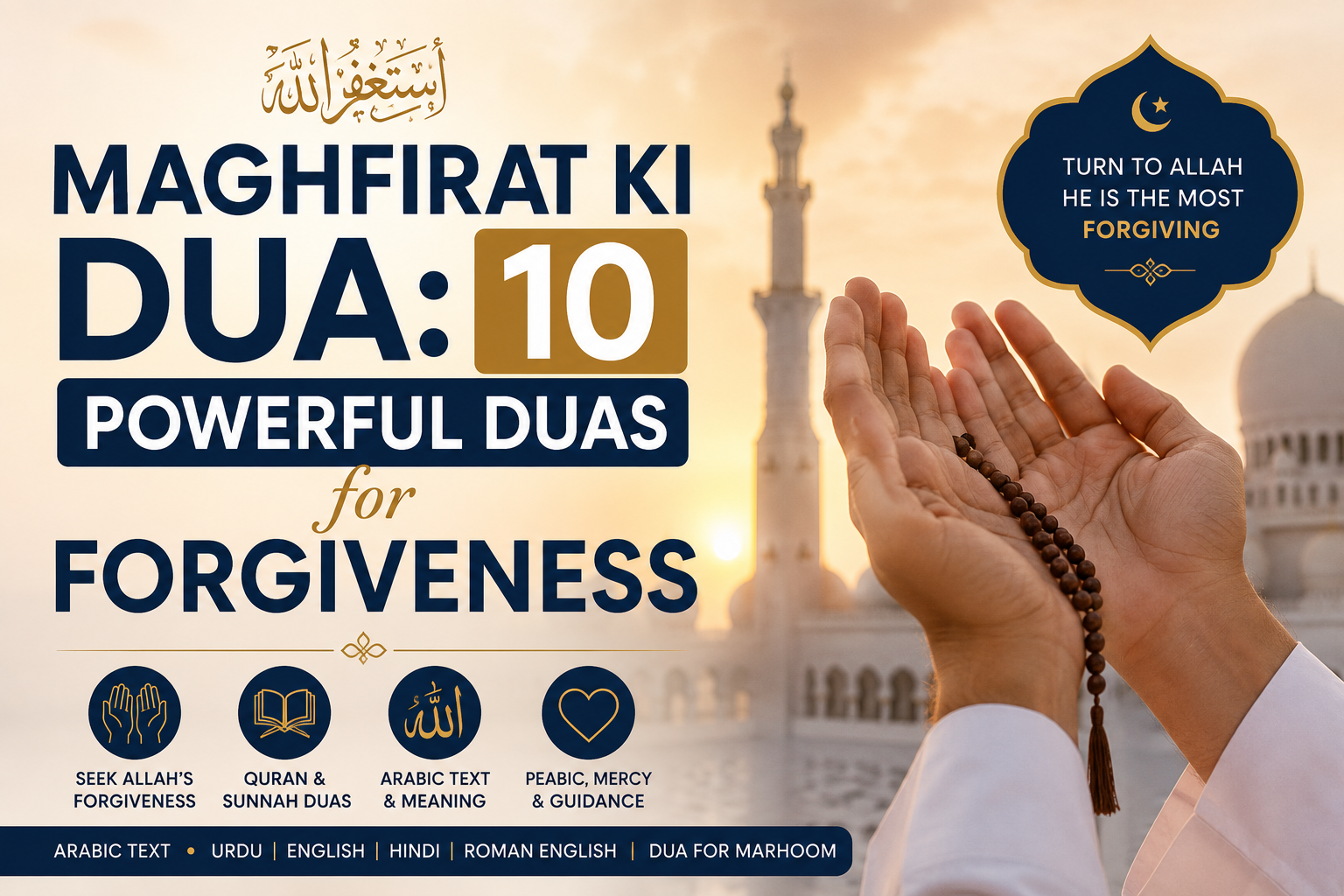
Everyone makes mistakes, but Islam teaches Muslims that Allah’s mercy is greater than our sins. When a person sincerely turns to Allah, asks for forgiveness, and seeks to improve, the doors of mercy remain open. Reciting a maghfirat ki dua is one of the beautiful ways to ask Allah for forgiveness and mercy.
The Quran and Sunnah contain many powerful supplications for seeking forgiveness. Some are short and easy to memorize, while others are longer and express deep regret, humility, and hope in Allah’s mercy. In this guide, we will explore 10 powerful duas for forgiveness, along with their Arabic text, transliteration, English meaning, and when they can be recited.
What Is Maghfirat Ki Dua?
Maghfirat ki dua means a supplication made to Allah to ask for forgiveness and mercy for sins and mistakes. The word maghfirah refers to Allah’s forgiveness and protection from the consequences of sins.
Seeking forgiveness is not limited to a particular time. A Muslim can ask Allah for forgiveness after making a mistake, during daily worship, after Salah, at night, or whenever they sincerely feel the need to return to Allah.
The Quran says:
“Indeed, Allah forgives all sins. Indeed, it is He who is the Forgiving, the Merciful.”
(Quran 39:53)
This verse gives believers hope and reminds them never to lose hope in Allah’s mercy.
10 Powerful Maghfirat Ki Duas for Forgiveness
1. Sayyidul Istighfar
Sayyidul Istighfar is one of the most famous supplications for seeking Allah’s forgiveness. The Prophet Muhammad ﷺ taught this dua and described its great virtue.
Arabic:
اللَّهُمَّ أَنْتَ رَبِّي لَا إِلَهَ إِلَّا أَنْتَ، خَلَقْتَنِي وَأَنَا عَبْدُكَ، وَأَنَا عَلَى عَهْدِكَ وَوَعْدِكَ مَا اسْتَطَعْتُ، أَعُوذُ بِكَ مِنْ شَرِّ مَا صَنَعْتُ، أَبُوءُ لَكَ بِنِعْمَتِكَ عَلَيَّ، وَأَبُوءُ لَكَ بِذَنْبِي، فَاغْفِرْ لِي، فَإِنَّهُ لَا يَغْفِرُ الذُّنُوبَ إِلَّا أَنْتَ
Roman English:
Allahumma anta Rabbi la ilaha illa Anta, khalaqtani wa ana ‘abduka, wa ana ‘ala ‘ahdika wa wa’dika mastata’tu, a’udhu bika min sharri ma sana’tu, abu’u laka bini’matika ‘alayya, wa abu’u laka bidhanbi, faghfir li fa innahu la yaghfirudh-dhunuba illa Anta.
English Meaning:
“O Allah, You are my Lord. There is no deity except You. You created me and I am Your servant. I am committed to Your covenant and promise as much as I can. I seek refuge in You from the evil of what I have done. I acknowledge Your blessings upon me and I acknowledge my sin. So forgive me, for no one forgives sins except You.”
This is an excellent maghfirat ki dua to include in your daily routine.
2. Rabbana Zalamna Anfusana
This is the dua made by Prophet Adam (AS) and his wife after their mistake.
Arabic:
رَبَّنَا ظَلَمْنَا أَنْفُسَنَا وَإِنْ لَمْ تَغْفِرْ لَنَا وَتَرْحَمْنَا لَنَكُونَنَّ مِنَ الْخَاسِرِينَ
Roman English:
Rabbana zalamna anfusana wa illam taghfir lana wa tarhamna lanakunanna minal-khasirin.
English Meaning:
“Our Lord, we have wronged ourselves, and if You do not forgive us and have mercy upon us, we will surely be among the losers.”
This short dua beautifully combines confession, repentance, and a request for Allah’s mercy.
3. Rabbi Inni Zalamtu Nafsi
Prophet Musa (AS) also turned to Allah after realizing his mistake.
Arabic:
رَبِّ إِنِّي ظَلَمْتُ نَفْسِي فَاغْفِرْ لِي
Roman English:
Rabbi inni zalamtu nafsi faghfir li.
English Meaning:
“My Lord, indeed I have wronged myself, so forgive me.”
This is one of the shortest and easiest duas for forgiveness to memorize.
4. Rabbighfir Li Wa Tub ‘Alayya
The Prophet Muhammad ﷺ frequently sought forgiveness from Allah.
A Muslim can regularly say:
Arabic:
رَبِّ اغْفِرْ لِي وَتُبْ عَلَيَّ
Roman English:
Rabbighfir li wa tub ‘alayya.
English Meaning:
“My Lord, forgive me and accept my repentance.”
It is especially meaningful when recited with sincere repentance and the intention to leave the sin.
5. Allahumma Innaka ‘Afuwwun
This well-known dua is particularly associated with seeking Allah’s pardon during Ramadan and Laylatul Qadr.
Arabic:
اللَّهُمَّ إِنَّكَ عَفُوٌّ تُحِبُّ الْعَفْوَ فَاعْفُ عَنِّي
Roman English:
Allahumma innaka ‘afuwwun tuhibbul-‘afwa fa’fu ‘anni.
English Meaning:
“O Allah, You are Most Forgiving, and You love forgiveness, so forgive me.”
Although commonly recited during Laylatul Qadr, Muslims can ask Allah for forgiveness with this supplication at other times as well.
6. Astaghfirullah
One of the simplest forms of maghfirat ki dua is:
Arabic:
أَسْتَغْفِرُ اللَّهَ
Roman English:
Astaghfirullah.
English Meaning:
“I seek forgiveness from Allah.”
A Muslim can frequently say Astaghfirullah throughout the day. The Prophet ﷺ regularly sought Allah’s forgiveness.
Despite being only one short phrase, it carries a profound meaning: the believer acknowledges their need for Allah’s forgiveness and mercy.
7. Astaghfirullaha Rabbi Min Kulli Dhanbin
Another commonly recited form of seeking forgiveness is:
Arabic:
أَسْتَغْفِرُ اللَّهَ رَبِّي مِنْ كُلِّ ذَنْبٍ
Roman English:
Astaghfirullaha Rabbi min kulli dhanbin.
Meaning:
“I seek forgiveness from Allah, my Lord, for every sin.”
The important part of istighfar is sincerity. A person should not merely repeat words but should genuinely regret wrongdoing and seek to avoid returning to it.
8. Rabbana Faghfir Lana Dhunubana
The Quran contains several supplications asking Allah for forgiveness.
Arabic:
رَبَّنَا فَاغْفِرْ لَنَا ذُنُوبَنَا وَكَفِّرْ عَنَّا سَيِّئَاتِنَا
Roman English:
Rabbana faghfir lana dhunubana wa kaffir ‘anna sayyi’atina.
English Meaning:
“Our Lord, so forgive us our sins and remove from us our misdeeds.”
This type of Quranic supplication reminds believers that forgiveness should be accompanied by humility and sincere faith.
9. Rabbighfir Warham
This is a short Quranic supplication asking Allah for forgiveness and mercy.
Arabic:
رَبِّ اغْفِرْ وَارْحَمْ
Roman English:
Rabbighfir warham.
English Meaning:
“My Lord, forgive and have mercy.”
Its short wording makes it easy to memorize and recite regularly.
10. Maghfirat Ki Dua for Marhoom
Islam also teaches Muslims to pray for deceased believers. If you are looking for a maghfirat ki dua for marhoom, you can sincerely ask Allah to forgive the deceased and grant them mercy.
A well-known supplication is:
Arabic:
اللَّهُمَّ اغْفِرْ لَهُ وَارْحَمْهُ وَعَافِهِ وَاعْفُ عَنْهُ
Roman English:
Allahummaghfir lahu warhamhu wa ‘afihi wa’fu ‘anhu.
English Meaning:
“O Allah, forgive him, have mercy upon him, grant him well-being, and pardon him.”
For a deceased woman, the wording can be adjusted to Allahummaghfir laha warhamha wa ‘afiha wa’fu ‘anha.
Praying for the deceased is a meaningful way to ask Allah to grant them forgiveness and mercy.
Maghfirat Ki Dua in English
For readers who want to understand the supplication in English, the central meaning of a maghfirat ki dua in English is a sincere request to Allah for forgiveness, mercy, and pardon.
For example:
“O Allah, forgive my sins, have mercy upon me, and accept my repentance. You are the Most Forgiving and Most Merciful.”
The exact Arabic duas mentioned in the Quran and Sunnah are preferred for recitation, while understanding their English meaning can help a person develop greater sincerity and concentration.
Maghfirat Ki Dua in Hindi
For Muslims searching for maghfirat ki dua in Hindi, the meaning can be understood as asking Allah to forgive one’s sins and show mercy.
हिंदी अर्थ:
“ऐ अल्लाह! मेरे गुनाहों को माफ़ फ़रमा, मुझ पर रहम फ़रमा और मेरी तौबा क़बूल फ़रमा। बेशक तू बहुत माफ़ करने वाला और रहम करने वाला है।”
Understanding the meaning helps a person recite the dua with greater awareness rather than simply repeating the words.
Maghfirat Ki Dua in Urdu
The maghfirat ki dua in Urdu can be understood as:
“اے اللہ! میرے گناہوں کو معاف فرما، مجھ پر رحم فرما اور میری توبہ قبول فرما۔ بے شک تو بہت بخشنے والا اور نہایت رحم کرنے والا ہے۔”
The Arabic supplications from the Quran and Sunnah can be recited along with their Urdu meaning to better understand what we are asking from Allah.
Maghfirat Ki Dua in Roman English
People who cannot read Arabic fluently often search for maghfirat ki dua in Roman English. One of the easiest duas to begin with is:
Astaghfirullah Rabbi min kulli dhanbin wa atubu ilayh.
Meaning:
“I seek forgiveness from Allah, my Lord, for every sin, and I repent to Him.”
Roman transliteration can help beginners learn pronunciation, but gradually learning the Arabic text is beneficial for those who are able to do so.
When Should You Recite Maghfirat Ki Dua?
There is no single moment when Muslims must ask Allah for forgiveness. You can make istighfar throughout the day. Some beneficial times include:
- After committing a mistake or sin
- After Salah
- During the last part of the night
- While making personal dua
- During Ramadan
- On Laylatul Qadr
- When feeling regret over a past mistake
- When beginning sincere repentance
You can also make a habit of daily remembrance and supplication. Alongside istighfar, Muslims may explore other daily Islamic supplications such as Daily Salam Dua to maintain a regular connection with remembrance and dua.
How to Make Sincere Tawbah
Reciting a maghfirat ki dua is most meaningful when it is accompanied by sincere repentance. Tawbah involves turning back to Allah and making a genuine effort to leave the wrongdoing.
Generally, sincere repentance involves:
- Recognizing the mistake: A person acknowledges that they have done something wrong.
- Feeling genuine regret: They sincerely regret committing the sin.
- Seeking Allah’s forgiveness: They ask Allah to forgive them.
- Leaving the sin: They make a sincere effort to stop the wrongdoing.
- Resolving not to return: They intend not to repeat the sin.
- Returning people’s rights: If another person’s rights were violated, the person should make amends and return what is owed where appropriate.
The purpose of repentance is not simply to repeat words but to return sincerely to Allah.
Benefits of Seeking Allah’s Forgiveness
Regular istighfar has a special place in Islam. It reminds a believer of their dependence on Allah and encourages humility.
Some important spiritual benefits include:
- Strengthening one’s relationship with Allah
- Developing humility
- Recognizing one’s mistakes
- Encouraging sincere repentance
- Increasing hope in Allah’s mercy
- Keeping the heart connected to remembrance
- Encouraging a person to improve their actions
The Quran repeatedly encourages believers to seek Allah’s forgiveness. Therefore, istighfar should be part of a Muslim’s regular spiritual routine rather than something practiced only after major mistakes.
Final Thoughts
A maghfirat ki dua is more than a collection of words. It represents a believer’s return to Allah, acknowledgment of mistakes, and hope in His mercy. The Quran and Sunnah provide many beautiful supplications for forgiveness, from the simple Astaghfirullah to the comprehensive Sayyidul Istighfar.
For a deceased loved one, a maghfirat ki dua for marhoom can be made by asking Allah to forgive them, have mercy upon them, and grant them peace. Above all, Muslims should never lose hope in Allah’s forgiveness and should continue turning back to Him with sincere hearts.
FAQs
1. What is the best maghfirat ki dua?
Sayyidul Istighfar is among the most comprehensive supplications for seeking Allah’s forgiveness.
2. How often should I recite maghfirat ki dua?
You can seek Allah’s forgiveness at any time and should make istighfar part of your regular daily remembrance.
3. What is the simplest dua for forgiveness?
Astaghfirullah is a simple and powerful phrase meaning, “I seek forgiveness from Allah.”
4. What is the maghfirat ki dua for marhoom?
You can say: Allahummaghfir lahu warhamhu wa ‘afihi wa’fu anhu, asking Allah to forgive and have mercy upon the deceased.
5. Can I make dua for forgiveness in my own language?
Yes. You can ask Allah sincerely in your own language. For established supplications from the Quran and Sunnah, learning and reciting the Arabic wording along with its meaning is beneficial.